
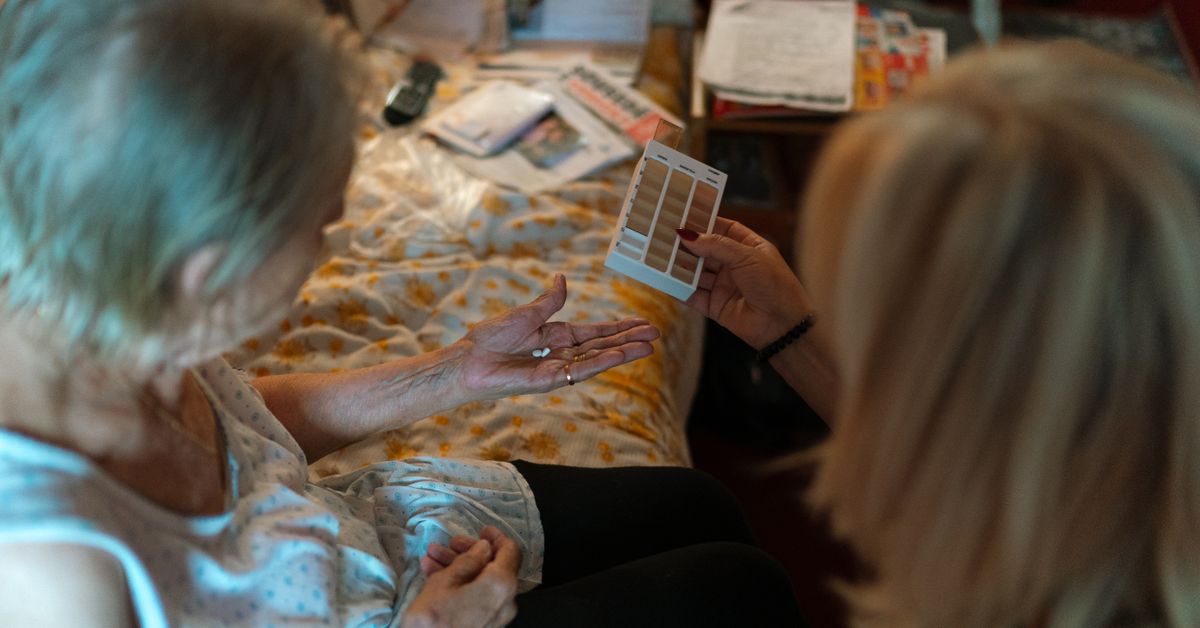
For many seniors, taking multiple medications each day is a normal part of maintaining their health. However, managing those prescriptions safely can be challenging without the right support. According to the Centers for Disease Control and Prevention (CDC), nearly 350,000 people each year visit the emergency room due to medication-related issues — many of which are preventable with proper management and awareness.
(Sources: CDC, National Institute on Aging)
If you’re a caregiver helping a loved one at home, here are practical steps to ensure medications are taken safely and effectively.

1. Keep an Up-to-Date Medication List
Maintain a detailed list of all prescribed and over-the-counter medications, vitamins, and supplements. Include dosage, timing, and the reason for each medication.
- Keep a printed copy in an easy-to-access place.
- Bring this list to all medical appointments to help healthcare providers monitor for drug interactions.
2. Create a Daily Medication Schedule
Consistency helps prevent missed or double doses. Try:
- Using a pill organizer labeled by day and time.
- Setting alarms or phone reminders to alert when it’s time for a dose.
- Aligning medications with daily routines (such as meals or bedtime).
Even small habits like checking off a chart after each dose can prevent confusion — especially when multiple caregivers are involved.

3. Understand Each Medication
Knowing what each medication does can make caregiving easier and safer. Take time to learn:
- The purpose of each prescription.
- Potential side effects and what to watch for.
- Storage instructions, such as whether it should be kept in a cool or dark place.
If something seems unusual, like new dizziness, fatigue, or changes in mood, contact a healthcare professional promptly.

4. Work Closely with Healthcare Providers
Good communication between caregivers, doctors, and pharmacists is key. Don’t hesitate to:
- Ask if any medications can be simplified or combined.
- Request easy-open containers or large-print labels for those with arthritis or vision loss.
- Schedule regular medication reviews, especially after hospital visits or new prescriptions.

5. Prevent Common Mistakes
Medication errors often happen due to small oversights. You can help prevent them by:
- Avoiding mixing pills in unlabeled containers.
- Double-checking expiration dates.
- Keeping all medications out of reach of children or pets.
6. Support Independence When Possible
Encourage your loved one to participate in their medication routine if it’s safe to do so. This helps them stay engaged in their own health and can reduce stress or confusion.

Compassionate Support for Medication Management
At Dignity Transition Care, our caregivers understand how important proper medication management is to your loved one’s safety and wellbeing. Our team offers personalized assistance, from reminders and organization to coordinating with healthcare providers; ensuring peace of mind for families and clients alike.
💛 Let us help you make home care safer and simpler. Contact Dignity Transition Care today to learn more about our personalized in-home services.