

Every adult deserves the opportunity to live as independently as possible. For individuals with disabilities, maintaining independence at home and in the community promotes dignity, confidence, and overall well-being. With the right support systems, adults with disabilities can thrive while maintaining control over their daily lives.

The Importance of Independence
Independence does not mean doing everything alone. It means having the freedom to make choices, participate in meaningful activities, and live in a safe, supportive environment. Encouraging autonomy can lead to higher self-esteem, better mental health, and stronger engagement in the community.
Building a Supportive Environment
- Encourage Daily Living Skills
Simple routines such as preparing meals, managing personal hygiene, or tidying a living space can foster a sense of accomplishment. Caregivers and family members can support by offering guidance rather than taking over tasks, allowing the person to do what they can at their own pace.

- Create an Accessible Home
Home adaptations can make a big difference in safety and independence. Installing grab bars, using non-slip mats, adjusting counter heights, or adding ramps can make it easier to move around and complete daily activities confidently.

- Promote Social Engagement
Community activities, volunteering, or spending time with friends help reduce isolation and improve quality of life. Social connections give purpose and joy, which are essential for emotional well-being.

- Use Technology to Support Independence
Smart home devices, medication reminders, and safety sensors can help adults with disabilities live more autonomously. Technology can also assist with communication, transportation, and access to health services.
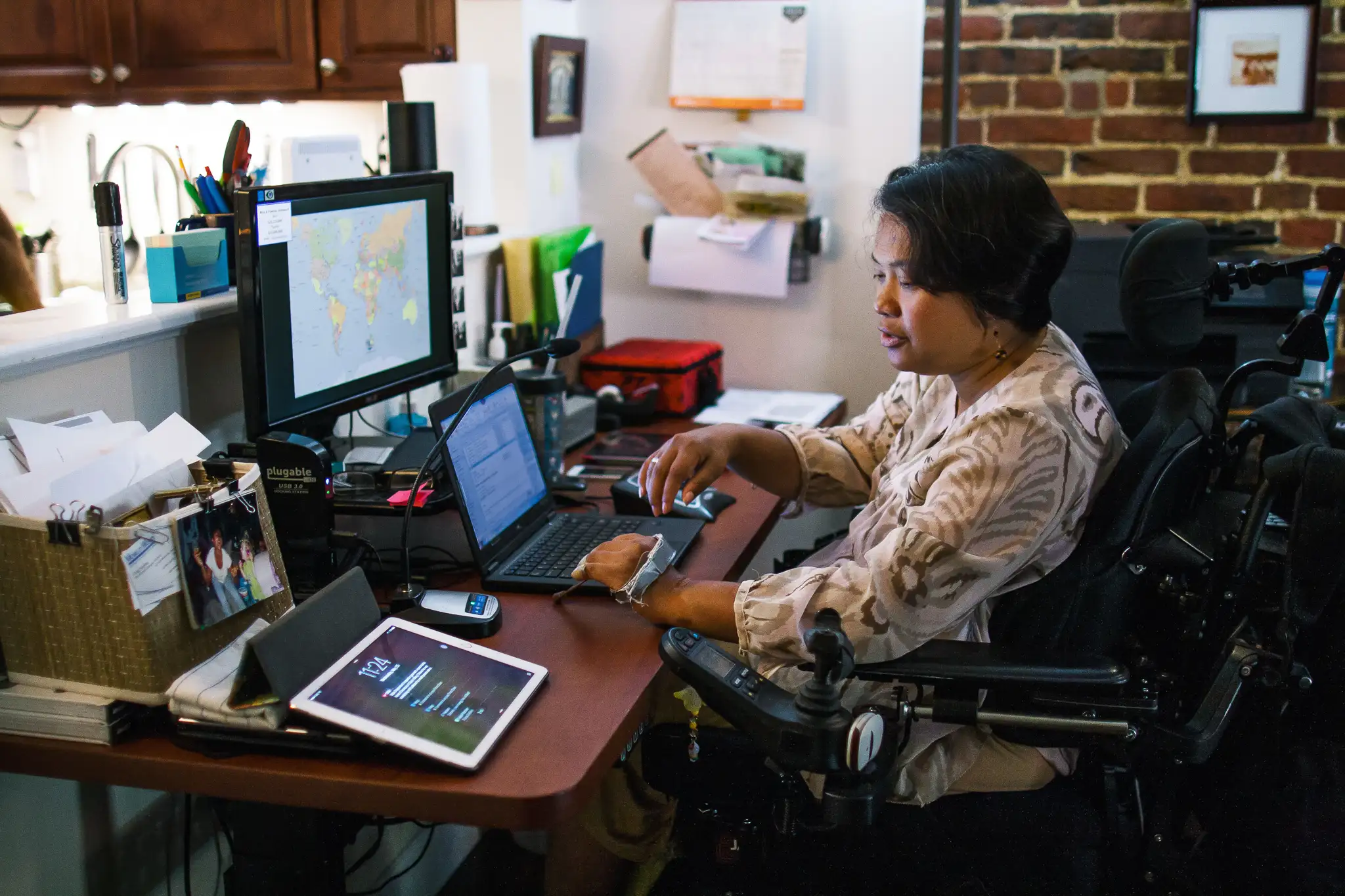
- Encourage Decision-Making
Involving individuals in their own care planning reinforces self-determination. Asking about preferences, goals, and comfort levels empowers them to take an active role in their daily lives. - Provide Consistent, Compassionate Care
Trained caregivers can offer the right balance of assistance and independence. Professional support helps ensure safety while respecting the individual’s abilities, choices, and routines.
Supporting Families and Caregivers
Families play a crucial role in promoting independence. Taking time for self-care, joining support groups, and using respite services can help caregivers maintain balance while continuing to provide thoughtful support.

A Commitment to Dignity and Choice
Supporting independence is about celebrating each person’s abilities and providing opportunities for growth. With understanding and the right care, adults with disabilities can lead fulfilling, empowered lives at home and in their communities.
If your loved one could benefit from in-home support that promotes independence, Dignity Transition Care provides personalized care tailored to each individual’s needs and goals. Our caregivers help clients build confidence while maintaining safety and dignity.
Sources
- https://www.cdc.gov/disability-and-health/?CDC_AAref_Val=https://www.cdc.gov/ncbddd/disabilityandhealth/index.html
- https://www.cdc.gov/disability-inclusion/about/?CDC_AAref_Val=https://www.cdc.gov/ncbddd/disabilityandhealth/disability-inclusion.html
- https://www.mayoclinic.org/healthy-lifestyle/stress-management/in-depth/caregiver-stress/art-20044784